The Complete Guide to Pool Cage Lighting in Florida
Published March 1, 2026 • 7 min read • By Donny McGuire
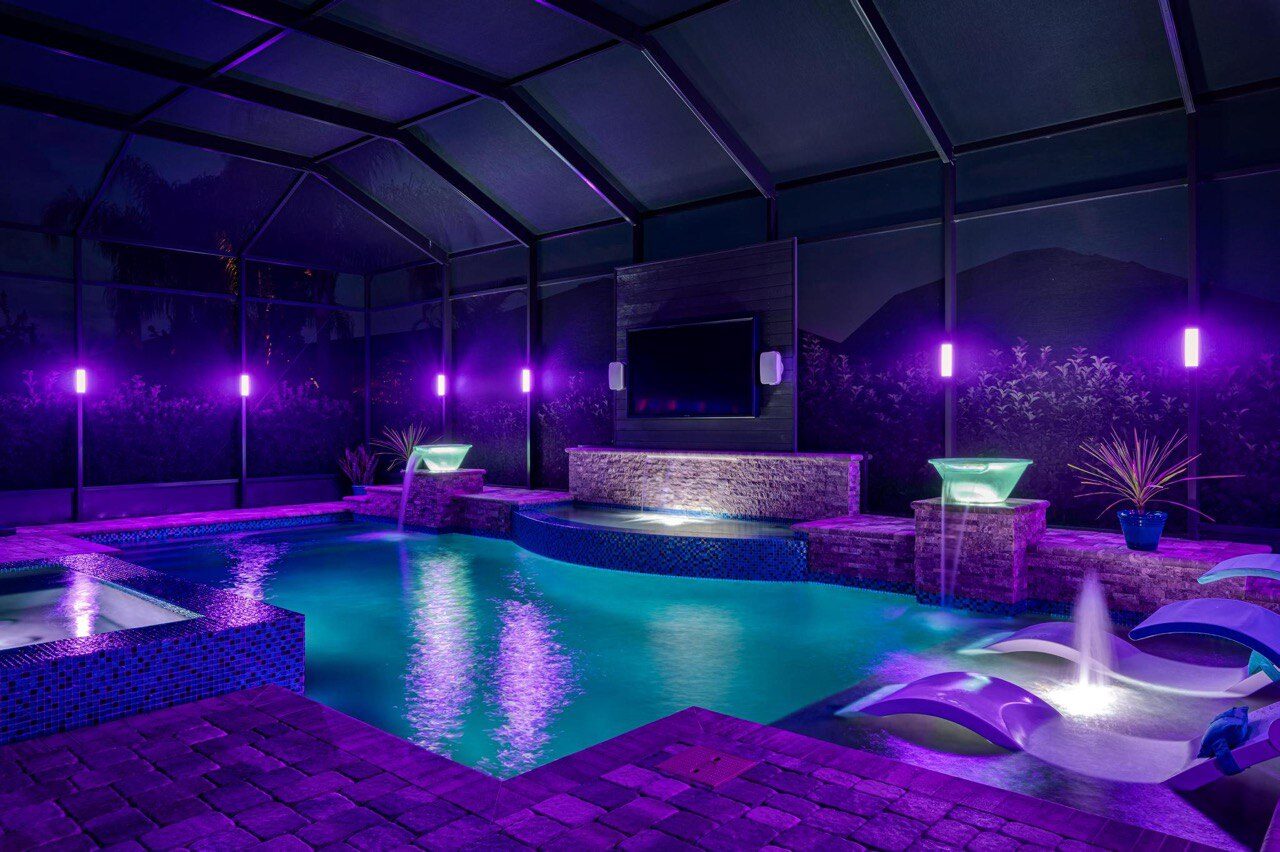
If you have a screen-enclosed pool in Sarasota or Bradenton, you have probably seen those neighbors with the glowing cages — purple, teal, warm white, slowly cycling through colors. That is LED pool cage lighting, and it has become one of the most popular electrical upgrades in our area over the past few years.
I install pool cage lighting almost every week. And I get a lot of the same questions, so I figured it was time to write everything down in one place. Here is what you actually need to know.
What Is Pool Cage Lighting?
Pool cage lighting is a system of LED light strips or individual LED fixtures mounted inside the aluminum framework of your screen enclosure. The LEDs run along the structural beams of the cage, tucked into channels so the strips themselves are mostly hidden. What you see is the light, not the hardware.
Most systems today use RGB or RGBW LED strips, which means you can choose from millions of color combinations, set scenes, program schedules, and control everything from your phone or a remote. Some homeowners keep theirs on a warm white every evening. Others like to set different colors for parties, holidays, or just because they feel like it.
How the Installation Works
This is not a weekend DIY project. Pool cage lighting needs to be wired into your home's electrical system with a dedicated circuit, a proper weatherproof controller, and low-voltage LED drivers that can handle the Florida heat and humidity.
Here is the general process:
- Walk-through and measurement. I come out, measure your cage, count the beams, figure out the total footage of LED strip needed, and identify where the power feed will come from.
- Electrical prep. I run a dedicated circuit from your panel to the controller location, usually on an exterior wall near the cage. This includes a GFCI-protected connection since we are near water.
- LED strip installation. The strips go into aluminum channels that mount along the cage beams. The channels protect the LEDs and give them a clean, finished look.
- Controller and driver setup. The controller, driver, and any amplifiers get mounted in a weatherproof enclosure. I program the system and pair it with your phone app.
- Testing and walkthrough. We go through every zone, every color, and make sure you know how to use it before I leave.
Most installations take one full day. Larger or more complex cages — especially ones with separate zones or integrated landscape lighting — might take a day and a half.
LED Types and Color Options
The two main types I install are:
- RGB strips — Red, green, and blue LEDs that mix to create a wide range of colors. Great for color-changing effects but the white they produce is not a true, clean white.
- RGBW strips — Same as RGB but with a dedicated white LED chip. This gives you a proper warm or cool white when you want everyday lighting, plus all the color options. This is what I recommend for most homeowners.
You can set solid colors, slow fades, quick transitions, or custom scenes. Most controllers let you set schedules too — automatic on at sunset, off at midnight, that kind of thing.
What Does Pool Cage Lighting Cost?
This is the question everyone asks first. The honest answer: it depends on your cage. A smaller cage with 150 feet of beam might run $2,500 to $4,000. A large cage with 400+ feet and multiple zones could be $6,000 to $10,000 or more.
The variables that affect price include the total linear footage of your cage beams, whether you want single-zone or multi-zone control, the quality of the LED strips and controllers, how far the electrical run is from your panel, and whether any panel work is needed to add the dedicated circuit.
I give free estimates, and I will tell you exactly what your specific cage will cost. No surprises. Check out the pool cage lighting service page for more details or contact me for a quote.
Maintenance and Longevity
Good-quality LED strips last 50,000 hours or more, which works out to roughly 10 to 15 years of normal evening use. The strips are rated for outdoor conditions, but the aluminum channels we mount them in add extra protection from Florida's UV, rain, and humidity.
Maintenance is minimal. Occasionally you might want to wipe down the channels if they collect pollen or dust. If a section ever fails, individual strips can be replaced without redoing the whole system.
Why You Should Hire a Licensed Electrician
I have seen homeowners try to do this themselves with adhesive LED strips from Amazon and an extension cord. It works for about three months until the Florida humidity gets into the connections, the adhesive fails in the heat, or worse — a short near the pool creates a real safety hazard.
A licensed electrician will make sure your system is on a dedicated, GFCI-protected circuit. The connections will be waterproof. The installation will meet NEC code requirements for outdoor wiring near a pool. And you will have a system that actually lasts.
I have been doing this work my entire life — it is a family trade. You can see examples of my pool cage lighting work in the project gallery, or read more about my background.
Ready to Light Up Your Pool Cage?
If you are in the Sarasota-Bradenton area and want to talk about pool cage lighting, give me a call at (941) 539-8892. I will come out, look at your cage, and give you an honest quote — no pressure, no games.