Pool Cage Lighting for Sarasota-Bradenton Homes
Your pool cage is the biggest room in your house — and after sundown, you can't even use it. That changes today.
I'm Donny McGuire, and pool cage lighting is what I'm known for. Pool builders, lanai contractors, and real estate agents across the Suncoast send their clients to me because I've done this hundreds of times. Not a handful. Hundreds. Every cage is different — different size, different frame style, different setup around the pool deck. I've seen them all.
Here's the short version: I mount waterproof LED strips inside the aluminum frame of your screen enclosure. You can't see them during the day. But when the sun goes down, your entire lanai comes to life. Your pool glows. Your outdoor kitchen is actually usable past 7 PM. And the best part? The color temperature I use doesn't attract bugs the way those old halogen floods do. That's not a sales pitch — that's just how warm-tone LEDs work.
Call (941) 539-8892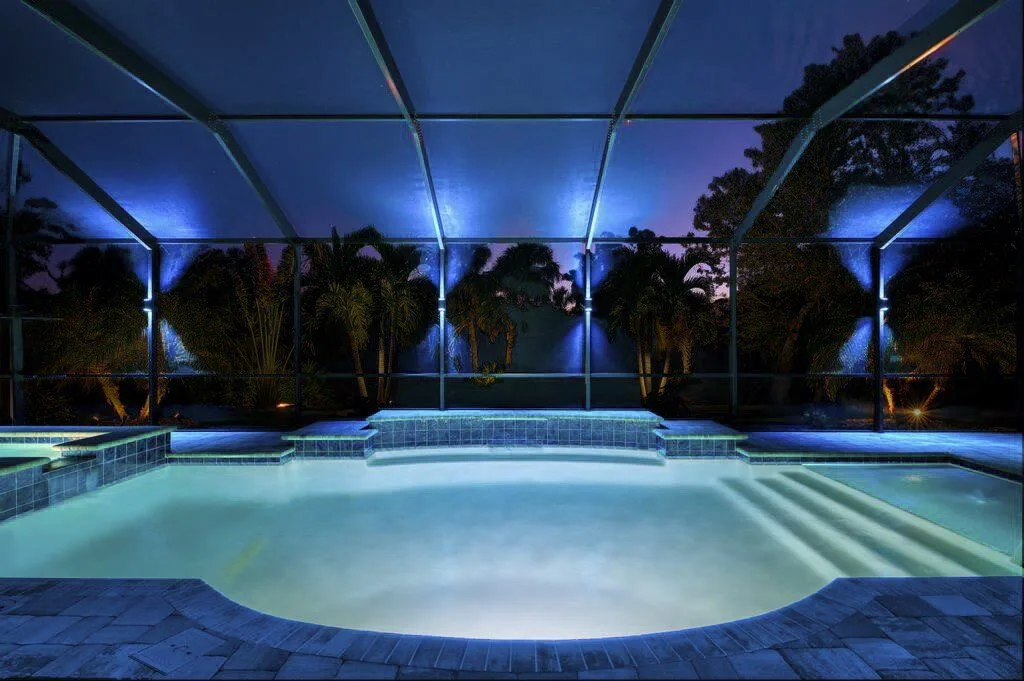
How Pool Cage Lighting Actually Works
No mystery here. I'll walk you through exactly what goes into a pool cage lighting job from start to finish.
Step 1: I Walk Your Cage
Every cage is different. I come out, measure the frame runs, look at how your panel's set up, figure out where the power's coming from, and check the condition of the aluminum. Some cages have thick structural beams perfect for LED channels. Others need a different mounting approach. I give you a written estimate on the spot — no guesswork, no "I'll get back to you."
Step 2: Dedicated Circuit & Transformer
I run a dedicated circuit from your main panel to a weatherproof transformer mounted near the cage. This steps the voltage down to 12V or 24V DC — safe around water, safe around kids, and up to code. No extension cords. No plug-in adapters sitting in the rain. Everything is hardwired and permitted when required.
Step 3: Mount the LED Strips
The LED strips go inside aluminum extrusion channels that mount flush to your cage frame. I use commercial-grade adhesive plus mechanical fasteners — because Florida heat, humidity, and the occasional tropical storm will peel off adhesive-only installs within a year. I've seen it happen on DIY jobs. My installations stay put.
Step 4: Controller & Color Setup
I install a wireless controller — usually WiFi or RF — so you can change colors, adjust brightness, set schedules, or dim everything down from your phone or a wall-mounted remote. Want teal for a Tuesday night swim? Done. Warm white for a dinner party? One tap. Most of my customers settle on two or three favorite settings and leave it there.
LED Types, Waterproofing, and What Actually Lasts in Florida
Not all LED strips are created equal. The cheap stuff from Amazon? It fades in six months and the adhesive fails in Florida humidity before that. Here's what I actually install:
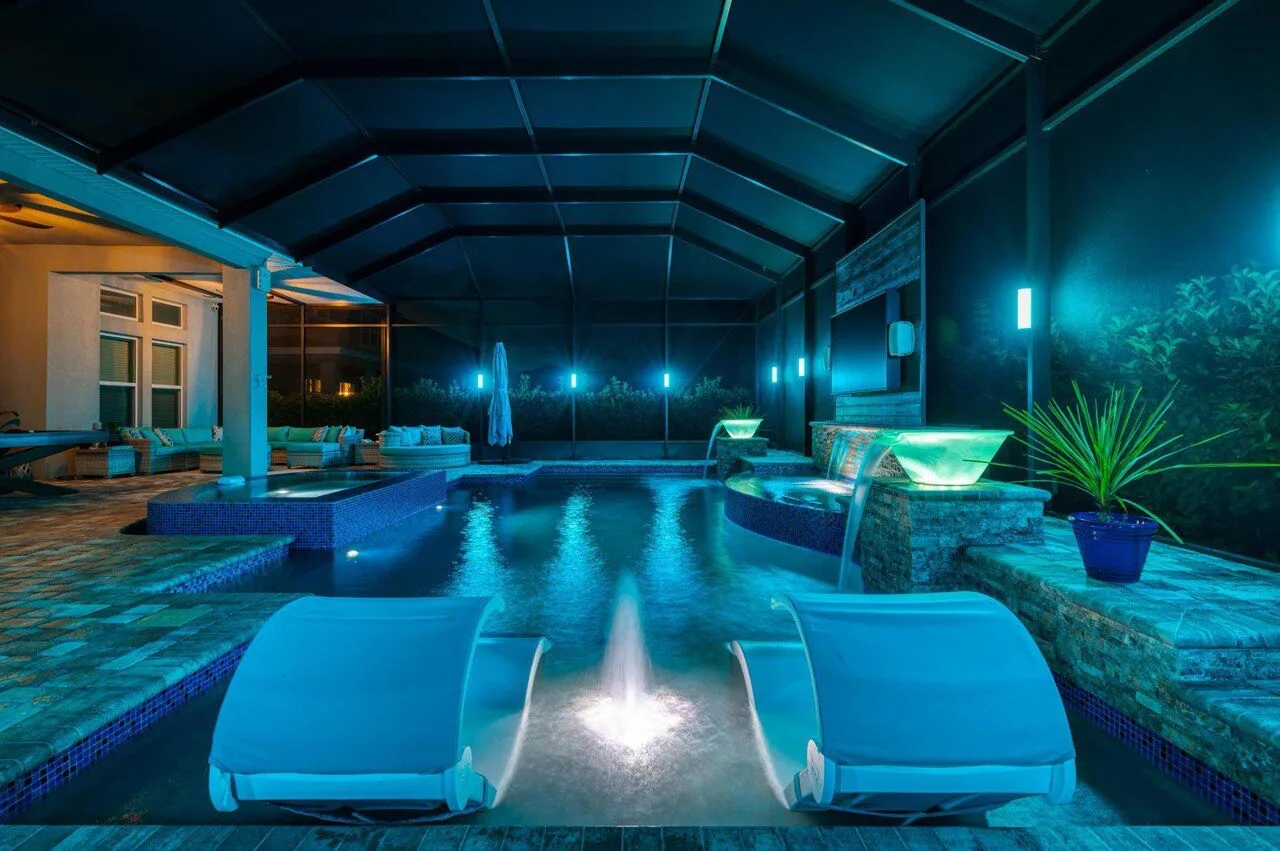
RGBW LED strips — that stands for Red, Green, Blue, plus a dedicated White channel. Having that separate white diode means you get a clean, natural white light when you want it — not the bluish-purple "white" that cheap RGB strips produce. You get millions of color combinations plus actual usable white light.
IP65 and IP67 rated — IP65 means sealed against water jets from any direction. IP67 means they can survive being submerged briefly. Around a pool cage with Florida afternoon rain and splash-out, you need at least IP65. I don't install anything lower.
50,000-hour rated lifespan — at four hours a night, that's over 30 years. The LEDs themselves pull a fraction of the power that old incandescent or halogen fixtures do. Most homeowners see less than $5 a month added to their electric bill.
Bug-resistant wavelengths — insects are attracted to ultraviolet and blue-heavy light. The warm-tone LEDs and RGBW strips I use sit in the color temperature range that bugs mostly ignore. You'll still get the occasional moth, but nothing like those old floodlights that turned your lanai into an insect convention.
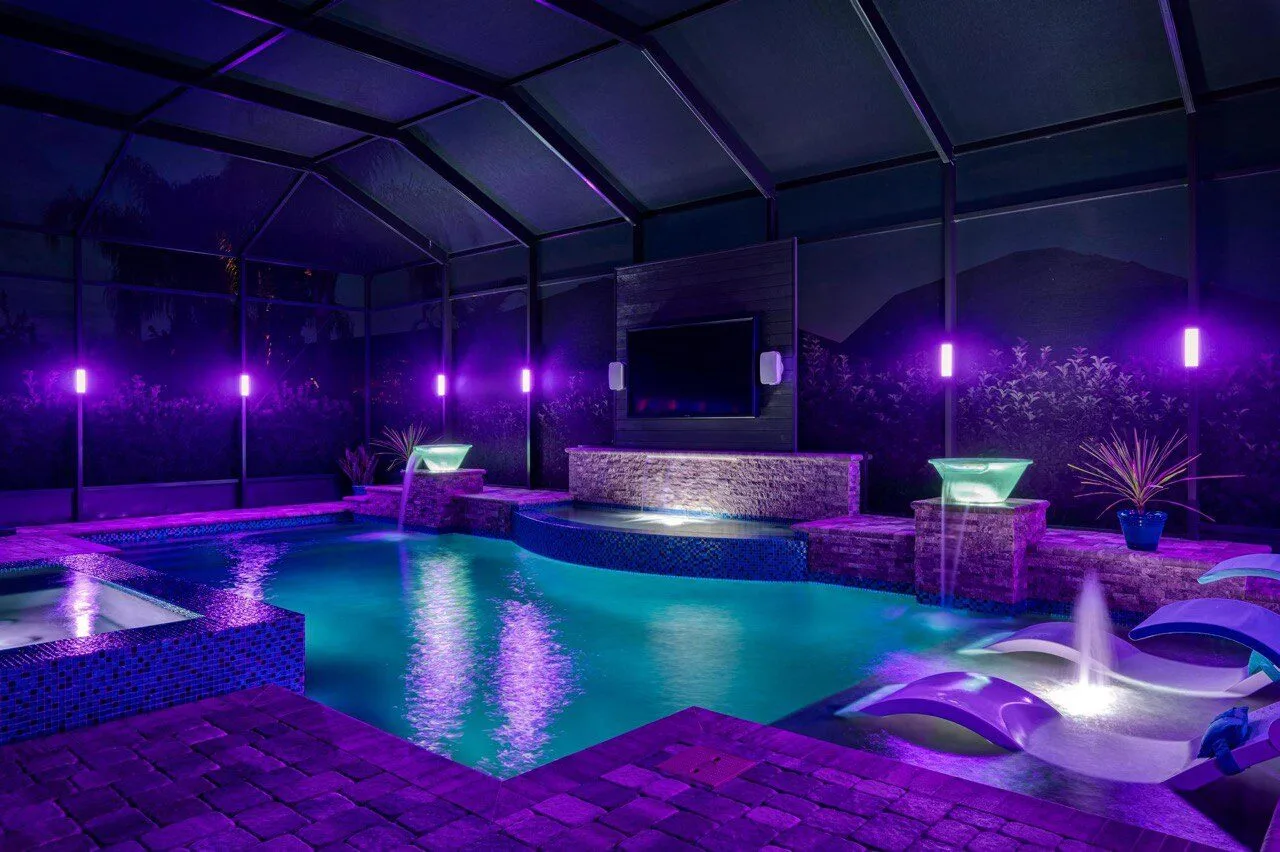
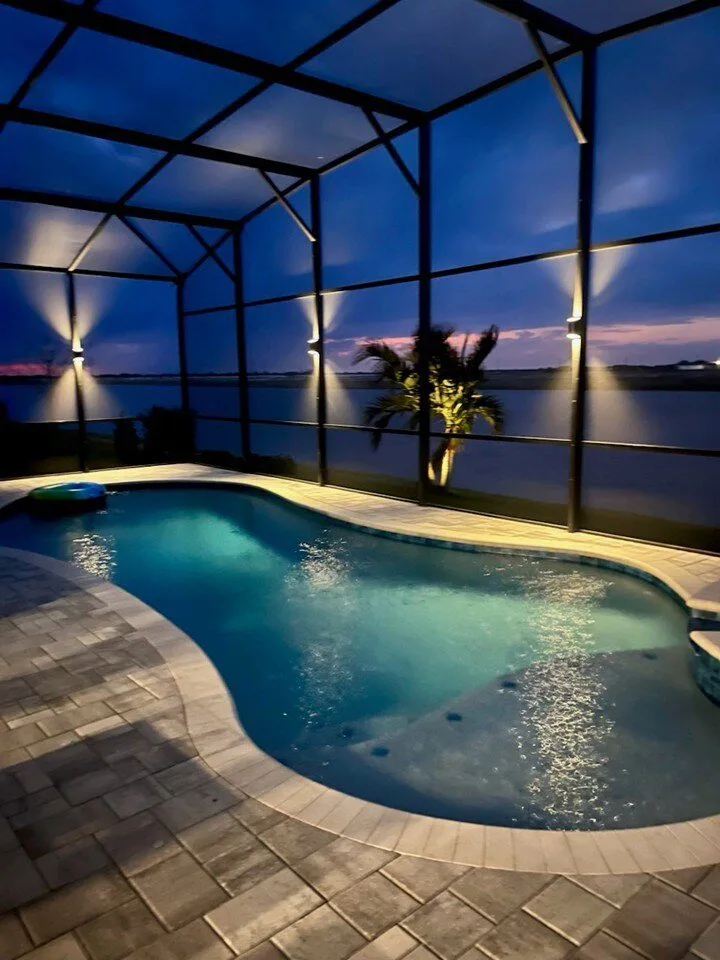
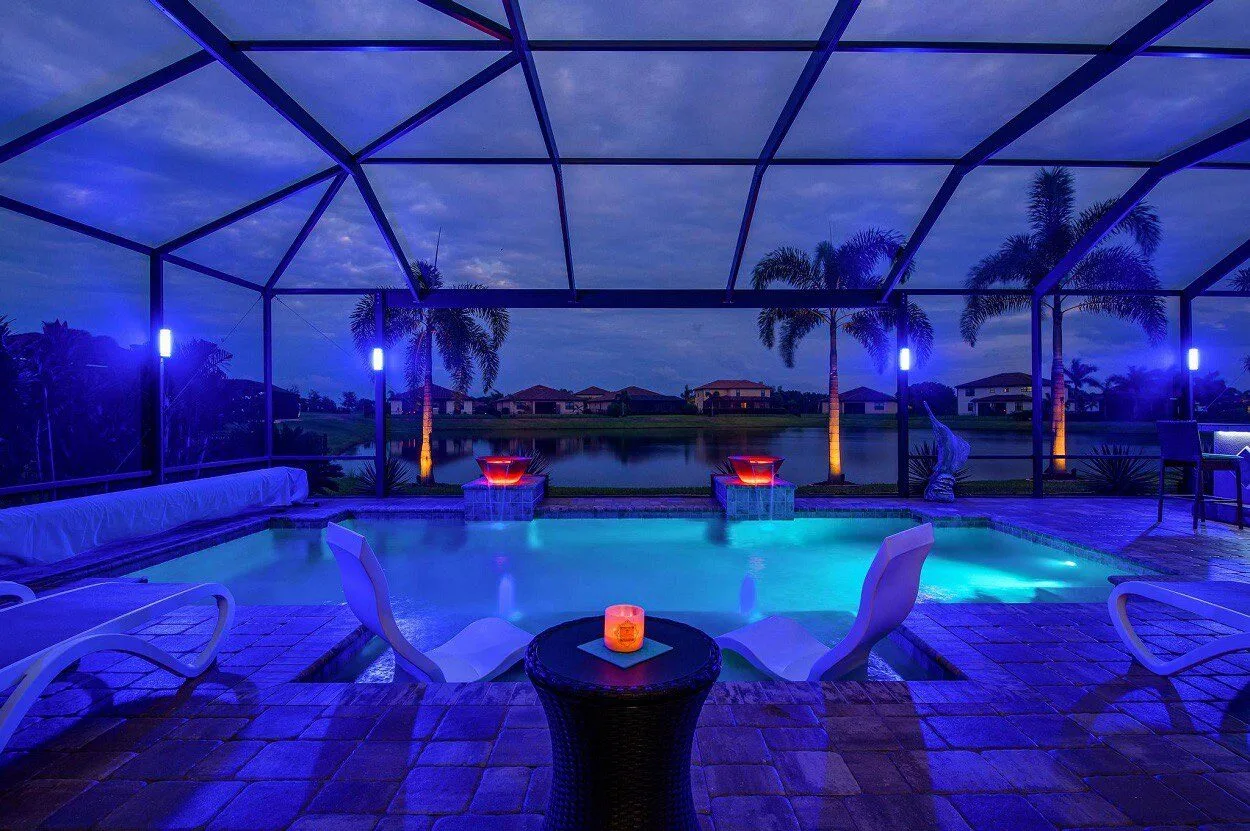
Actual Pool Cage Installs by Donny
Every one of these is a real job I did for a Sarasota-Bradenton homeowner. No stock photos. No renders.
Your Neighbor's Handyman Shouldn't Be Wiring Anything Near Your Pool
I'll be blunt: pool cage lighting involves electricity near water. That's not a DIY project. It's not a handyman project. Florida code requires a licensed electrical contractor for this kind of work, and for good reason.
I pull permits when required, I use UL-listed components, and every transformer and connection point is rated for wet locations. The low-voltage side is inherently safe — 12V or 24V won't hurt you — but the line-voltage side feeding the transformer needs to be done right. Wrong wire gauge, wrong breaker size, wrong conduit for an outdoor run, and you've got a fire risk or a code violation sitting behind your pool.
I've fixed plenty of DIY cage lighting jobs. Splices wrapped in electrical tape sitting in puddles. Indoor-rated wire run through outdoor conduit with no weatherheads. Transformers mounted in direct sun with no ventilation. It's always cheaper to do it right the first time than to pay someone to undo the mess and start over.
Ready to Light Up Your Lanai? Call Donny.
Free estimates. I'll come out, walk your cage, and give you a number before I pick up a single tool. No pressure, no obligation. Most installs are done in a single day.